
 ART
ARTArt
The Angel of the Evening: A Lesson in Light and Longing
On Austin Guo` photo
by Mirjana Petrovic
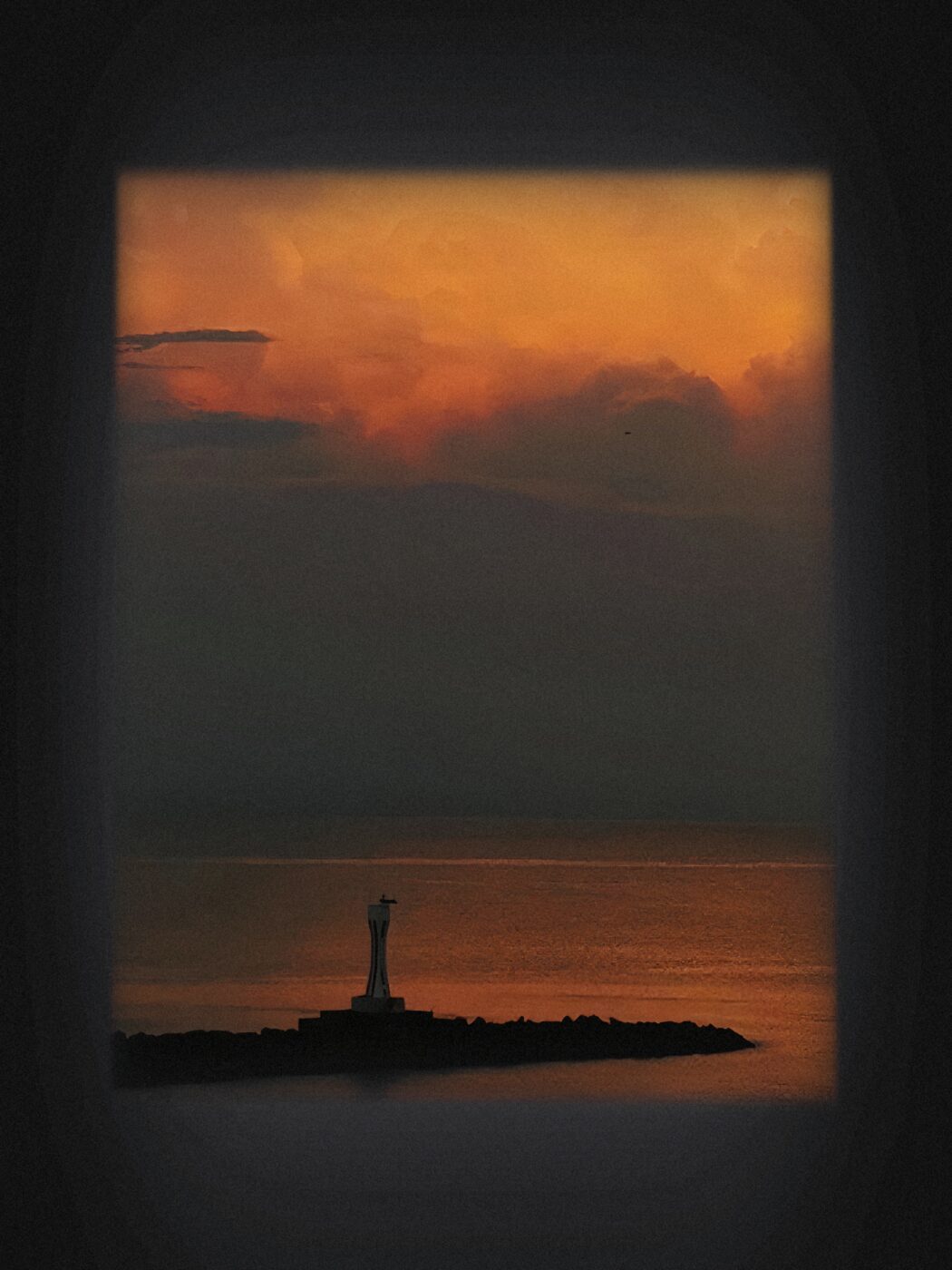
by Austin Guo
There is a moment in Wong Kar-wai's In the Mood for Love where a shot is not just a shot—it is a sigh. The slow glide of a cheongsam, the curl of cigarette smoke in a narrow hallway, the profound loneliness held in a single glance. These are not scenes you simply watch; they are emotions you inhabit. The film doesn't just tell a story; it wraps you in a mood, a delicate and persistent melancholy that lingers long after the screen fades to black.
I felt that same feeling recently, not in a cinema, but on my phone.
A former student, Austin Guo, now a young man with an artist's eye, shared a photograph. He had paired it with the perfect, breath-taking line from William Blake: “Thou fair-hair'd angel of the evening…” And while the words were beautiful, it was the image itself that stole my breath and settled deep within me—a quiet, profound feeling of pure poetry.
The photo is a study in stillness. A solitary monument on its base, anchored in the sea, stands as a silent sentinel against the immense sky. But the true subject isn't the stone; it's the evening itself. The sky is a soft, bruised canvas, painted in tones of dove-grey and the faintest blush of vanished sunlight. Clouds, delicate as worn lace, drift slowly, holding the last, gentle light of day.
This isn't a grand or dramatic landscape. It is a moment of exquisite quiet. The composition is a masterclass in mood. The dark, solid form of the monument grounds us, while the vast, tender sky pulls our heart into a feeling of infinite, gentle longing. The light doesn't blaze; it lingers. It clings to the edges of the clouds and touches the water's surface with a soft, melancholic grace.
This is what poetry and great art have always done. They use their own language—words, light, shadow—not just to show us something, but to make us feel something. Austin’s photo is a visual haiku. It needs no explanation. It creates a world of feeling, a deep and moving mood of peaceful solitude and beautiful, transient time.
Just like the most poignant shots in Wong Kar-wai's film, it tells us that the most powerful stories are often wordless. They are written not in ink, but in the delicate light of a fading evening, a language of the heart that needs no translation.